

Reżimy sankcyjne w wybranych ujęciach teoretycznych
Już pobieżna kwerenda opracowań naukowych oraz encyklopedycznych prowadzi do sumarycznego wniosku, że sankcje gospodarcze obok działań militarnych i dyplomatycznych, stanowią powszechnie stosowany sposób wywierania nacisku na określone kraje w celu doprowadzenia do redefinicji i rekonstrukcji prowadzonej przez nie polityki (przede wszystkim łamania praw człowieka, inicjowania aktów terrorystycznych, handlu bronią oraz innych działań naruszających akceptowany porządek geopolityczny). Następstwem polityki sankcyjnej jest szeroko rozumiana izolacja danego kraju na arenie międzynarodowej, która finalnie skutkuje zachwianiem równowagi na rynkach dóbr i usług, perturbacjami w bilansie handlowym oraz zmianami nastrojów społecznych, wyrażanych w postawach, świadomości i oczekiwaniach obywateli.
Na gruncie opracowań encyklopedycznych oraz leksykalnych sankcje, osadzone na kanwie relacji społecznych, definiowane są jako reakcje grupy społecznej na zachowania członków uzna-wane za pożądane lub niepożądane z punktu widzenia interesów tej grupy. Patrząc przez pryzmat stosunków gospodarczych, sankcje stanowią element blokady ekonomicznej rozumianej jako całokształt instrumentów i działań ekonomicznych podjętych przez państwo lub grupę państw w celu zaburzenia funkcjonowania gospodarki państwa blokowanego. Poruszając się w obrębie wybranych opracowań akademickich warto zwrócić uwagę na zwięzłe, a przy tym trafne określenie sankcji definiowanej jako „(…) negatywna reakcja społeczności międzynarodowej, z którą spotyka się państwo naruszające normy prawa (…)” (Bierzanek, Symonides, 2003, s. 24). Odnosząc się do zastosowania sankcji w praktyce na uwagę zasługuje pierwiastek dobrowolności, w świetle którego wspomniane sankcje to „(…) wolicjonalny środek wywierania presji na państwa naruszające ład międzynarodowy” (Nowicki, 2015, s. 391). W szerszym kontekście reżim sankcyjny obejmuje działania mające charakter ostrzegawczo-dyscyplinujący. „Sankcje uznaje się za rozwiązania akceptowane przez państwa i prawo międzynarodowe (…), których stosowanie jest formą dyscyplinowania podmiotu, wobec którego takie rozwiązania się stosuje (…) jak formę ostrzeżenia (…), że możliwa jest dalsza eskalacja działań” (Żukrowska, 2022, s. 86). Interesujące podejście prezentuje Adam Budnikowski, który sankcje sprowadza do ograniczeń handlowych, co ciekawe – niedających się uzasadnić ani czynnikami ekonomicznymi, ani społecznymi. „U podstaw stosowania sankcji leży przekonanie, że w wyniku ich zastosowania kraj, przeciwko któremu są one skierowane, poniesie straty ekonomiczne, które w konsekwencji skłonią go do postępowania zgodnego z intencjami kraju lub grupy krajów wprowadzających sankcje” (Budnikowski, 2017, s. 247). Dokonując klasyfikacji sankcji (handlowe oraz finansowe) autor podkreśla, że skuteczność obostrzeń zależy do szeregu czynników, w tym społecznej akceptacji ze strony społeczności państwa wprowadzającego sankcje, m.in. wartościami akceptowanymi zarówno przez tę społeczność, jak również przez struktury międzynarodowe.
Analizując mechanizmy sankcji gospodarczych warto uwypuklić elementarną klasyfikację na represję, zastraszanie oraz sygnały. Pod pojęciem represji rozumieć należy ekonomiczne osłabienie potencjału określonego państwa, mające na celu wywarcie wpływu na reorganizację mechanizmów i trajektorii prowadzonych działań, w tym stosunków politycznych. Nadrzędnym celem zastraszania jest wywarcie presji na ekipę rządową i klasę polityczną danego kraju, której efektem finalnym będzie zahamowanie działań naruszających integralność danego państwa lub innych praktyk wykraczających poza powszechnie aprobowany ład geopolityczny. Patrząc przez pryzmat mechanizmu sygnału, sankcje stanowią wyraz dezaprobaty wobec niepożądanych działań danego państwa, z kolei transmisja sygnału (o podjęciu sankcji) w przestrzeni międzynarodowej obniża reputację danego państwa, nadając jego przedstawicielom status „persona non grata”.
Mówiąc o reżimie sankcyjnym nie sposób pominąć szerokiego spektrum sytuacji, w których sięga się po mechanizmy działań sankcyjnych. W omawianym przypadku są one reakcją na naruszenie integralności terytorialnej oraz (nie)porządek w cyberprzestrzeni; próbę wywarcia nacisku politycznego w celu zahamowania działań niezgodnych z obowiązującym prawem; wsparcie szeroko rozumianych praw człowieka i inne. Poruszając się z kolei wokół problematyki instrumentów kreujących sankcje gospodarcze, warto wyróżnić trzy aspekty: bojkot towarów i usług; embargo ograniczające eksport/import oraz zamrożenie aktywów w połączeniu z ograniczeniem inwestycji, udzielania kredytów i pożyczek. Na potrzeby pełnego nakreślenia problematyki sankcji warto odnieść się do kryterium operacyjnego, na bazie którego sklasyfikować można sankcje: finansowe, technologiczne, wizowe/podróżne oraz handlowe. Mając na uwadze skuteczność reżimu sank-cyjnego, w tym trafność doboru sankcji w literaturze przedmiotu coraz częściej odnaleźć można odniesienie do sankcji selektywnych, określanych mianem inteligentnych. „Sankcje tego typu skupiają się na elitach rządzących i decydentach politycznych oraz tych, którzy wspierają niewłaściwą politykę kraju objętego sankcjami” (Lepczyński, Pisarewicz, 2024, s. 289).
Na gruncie nauk socjologicznych rozważania na temat sankcji mają ścisły związek z problematyką kontroli społecznej, która z kolei jest warunkiem sine qua non umiejętnie funkcjonującego porządku geopolitycznego, w tym relacji i powiązań na płaszczyźnie mikro- oraz makrospołecznej. „Kontrola społeczna (…) w socjologii (…) to wszelkie mechanizmy uruchamiające, a niekiedy i wymuszające współdziałanie, które utrzymuje porządek społeczny” (Szacka, 2003, s. 160). W powszechnie opisywanych próbach definicji kontroli społecznej kładzie się nacisk na system sposobów, przy pomocy których dokonuje się dyscyplinowania zarówno określonych podmiotów prawnych, jak również osób fizycznych. Sposoby te określa się mianem sankcji wymierzanych za działania wykraczające poza powszechnie obowiązujące normy. „Wszystkie rodzaje kontroli rozporządzają sobie właściwym repertuarem sankcji” (Szacka, 2003, s. 161). Na uwagę zasługuje fakt, że w opracowaniach socjologicznych sankcje to zjawiska społeczne polegające na krytykowaniu zachowań, które wykraczają poza akceptowane społecznie postępowania. Fundamentalnym zało-żeniem nakreślonego w ten sposób reżimu sankcyjnego jest przekonanie, że pogorszenie sytuacji, np. ekonomicznej, będącej reperkusją nałożenia sankcji jest skutecznym motywatorem do powrotu na drogę przestrzegania obowiązujących i akceptowanych przepisów i norm.
Sieć – od ujęcia metaforycznego do bytu realnego. Implikacje dla dyskursu na temat konfliktu hybrydowego
Spojrzenie na konflikt hybrydowy przez pryzmat sieci uzasadnione jest specyfiką konfliktu, w szczególności jego elastycznością oraz umiejętnością adaptacji do nowych, a jednocześnie zmiennych warunków otoczenia (Pacek, Pacek, 2020, s. 24). Sieć jako metafora i narzędzie analityczne stanowi skuteczną „aparaturę” do teoretycznego oraz empirycznego uchwycenia konfliktu hybrydowego, co uzasadnić można kilkoma przesłankami. Po pierwsze, specyfiką współczesnego konfliktu jest wszechobecny chaos będący następstwem braku jakichkolwiek granic pomiędzy stronami sporu. Mowa tutaj zarówno o tradycyjnie rozumianych liniach frontu, jak również szerokiej palecie działań operacyjnych, w tym zróżnicowanym sposobie prowadzenia walki. Trafna jest zatem teza, że „(…) w przyszłej wojnie nie będzie granic ani pomiędzy stronami konfliktu, ani obszarami działań operacyjnych, ani (…) między legalnym a nielegalnym sposobem prowadzenia walki (…)” (Banasik, 2018, s. 58). Po drugie, skuteczny arsenał wojny hybrydowej stanowią dzia-łania o charakterze psychologiczno-informacyjnym realizowane zarówno w cyberprzestrzeni, jak również w przestrzeni mentalnej, zwanej noosferą. Po trzecie, sieć jest adekwatnym narzędziem do analizy i opisu przestrzeni działań hybrydowych skupionych wokół aktorów państwowych oraz niepaństwowych, sięgających po rozmaite środki i modele walki, w tym działania ekonomiczne, psychologiczne, informacyjne, zachodzące w świecie realnym jak również wirtualnym. Po czwarte, sieć wychodzi naprzeciw wielowymiarowej dyskusji traktującej wojnę hybrydową nie tylko jako wzorzec prowadzenia konfliktu, ale również koncepcję teoretyczną oraz perspektywę analityczną, przybierając formę spoiwa łączącego wielowymiarowość współczesnej nauki. Po piąte, podejście sieciowe łamie dotychczasowy monopol na stosowanie i opisywanie przemocy, do której niewątpliwie zalicza się konflikt, która to przemoc w dobie XXI wieku „(…) jest asymetryczna, ucywilniona, (…) komercyjna i usieciowiona” (Banasik, 2018, s. 101). Po szóste, odwołanie się do koncepcji struktur sieciowych na drodze uchwycenia konfliktu hybrydowego odpowiada podmiotowemu jak również przedmiotowemu zakresowi konfliktu. Zakres podmiotowy obrazuje różnorodność podmiotów państwowych oraz niepaństwowych, zaangażowanych w konflikt hybrydowy, które w języku analizy sieciowej określa się mianem „węzłów” lub „aktorów” sieci. Z kolei zakres przedmiotowy nakreśla formy realizacji wojny hybrydowej, z zastosowaniem między innymi sankcji ekonomicznych, dezinformacji, propagandy, itd., co na gruncie analizy sieci społecznych określa się mianem powiązań oraz przepływów zachodzących w obrębie konfiguracji sieciowych (Baluk, Doroszko, 2017).
Reasumując, warto podkreślić, że próba implementacji koncepcji konfliktu hybrydowego na grunt społeczeństwa sieciowego ma swoje uzasadnienie i odzwierciedlenie w organizacji społeczeństw XXI wieku, w których sieć to wspólny mianownik dla wszystkich form życia. Tam bowiem gdzie dotykamy życia, sięgamy również do sieci. Uzupełnieniem zaprezentowanego warsztatu badawczo-teoretycznego jest pierwiastek aterytorialności oraz rozmytych granic, opisujący współczesne konfiguracje życia społecznego. „Sieci nie mają trwałych granic, są otwarte (…), a ich rozszerzanie się lub kurczenie zależy od zgodności interesów (…)” (Castells, 2013, s. 31). Ponadto, sięgniecie po aparaturę sieciową do analizy i opisu konfliktu hybrydowego wynika ze spojrzenia na konflikt przez optykę strukturalną lub systemową, będącą przestrzennym odwzorowaniem logiki świata XXI wieku (Wojnowski, 2015).
Konflikt hybrydowy – współczesny teatr działań wojennych
Architektura świata XXI wieku nakreślana jest przez szerokie spektrum procesów oraz zjawisk społecznych, politycznych, ekonomicznych i technologicznych, których wspólnym mianownikiem jest sieć rozumiana, jak wspomniano wcześniej, jako narzędzie analityczne, metafora oraz realny byt. Rozwój nowoczesnych technologii, powszechny exodus ze świata realnego do wirtualnego, kumulacja sieci społecznościowych to tylko wybrane aspekty, które czynią współczesny świat „galaktyką Internetu”, „przestrzenią przepływów” czy „przestrzenią bez miejsc”1. Następstwem tego jest szereg nowych wyzwań i zagrożeń asymetrycznych, cybernetycznych oraz hybrydowych oplatających kolejne państwa i społeczeństwa. Dynamika konfliktów nowej generacji przybiera na złożoności, dotykając przy tym sfery politycznej, militarnej i ekonomicznej, co w konsekwencji utrudnia jednoznaczną identyfikację zagrożeń i desygnatów współczesnej wojny. W opinii teoretyków i analityków chaos terminologiczno-empiryczny leży po stronie ogólności a zarazem nieostrości pojęcia konfliktu. Asymetria i hybrydowość współczesnych wojen ma odzwierciedlenie w dualnej naturze – terytorialnej i wirtualnej. Pierwsza to klasycznie rozumiana przestrzeń geograficzna czy administracyjna, ratyfikowana na drodze odpowiednich umów i porozumień międzynarodowych. Druga przyjmuje kształt kompozycji sieciowej, wykraczającej poza tradycyjnie rozumiane granice i terytoria. Jest strukturą „(…) umożliwiającą komunikowanie w obrębie danej sieci, globalne propagowanie wartości, idei i zasad, a także utrzymywanie i odtwarzanie własnej struktury” (Pacek, 2022, s. 24). W tym miejscu warto podkreślić, że wspólnym mianownikiem wszelkiego rodzaju prób zdefiniowania konfliktu hybrydowego jest maksymalizacja różnego typu działań operacyjnych, zarówno militarnych, jak i pozamilitarnych, zwiększających skuteczność przewagi nad rywalem.
Holistyczne ujęcie wojny hybrydowej prezentuje między innymi Bogusław Pacek, który pod tym terminem rozumie „(…) konflikt (…), ze stosowaniem na szeroką skalę działań ekonomiczno-gospodarczych, politycznych, informacyjno-propagandowych, o różnych i zmieniających się obiektach ataku (…), zmierzający do pokonania strony przeciwnej lub wymuszenia na niej pożądanego działania (…)” (Pacek, 2018, s. 118). W swoich rozważaniach autor nakreśla elementarny cel konfliktu hybrydowego. „Ważne jest (…) osłabienie struktur państwowych. W przyszłych wojnach dopiero po osłabieniu przeciwnego państwa stosować się będzie wobec niego działania militarne. (…). Wykorzystywane na szeroką skalę będą komponent cywilny oraz tzw. potencjał protestu, wynikający z niezadowolenia części społeczeństwa przeciwnika” (Pacek, 2018, s. 15). Efekt, o którym wspomina Bogusław Pacek jest możliwy do osiągnięcia między innymi na drodze asymetrycznych działań zmierzających do osłabienia przeciwnika poprzez zastosowanie kanałów informacyjnych, dyplomatycznych i ekonomicznych oraz różnorodnych form propagandy, oddziaływujących na sferę psychologiczną, wzmacniających nastroje niepewności, niezadowolenia, zagrożenia, itd.
Wieloaspektowość i złożoność współczesnych konfliktów wyzwala wśród badaczy potrzebę swoistego restartu na ścieżce identyfikacji i deskrypcji konfliktów. „Niezbędnym dla prawidłowego zrozumienia zachodzących w tej materii zmian jest uwzględnienie determinant politycznych, społecznych i ekonomicznych” (Grabowska, 2015, s. 278). Podbudową do tak zdefiniowanych operacji jest wszechobecne poczucie chaosu, napędzane przez płynny lęk oraz niepewność. „Chaos nie będzie tworzony przypadkowo, ale w sposób celowy, usystematyzowany i przemyślany przez centralne kierownictwo” (Banasik, 2018, s. 57). Pojęcie konfliktu hybrydowego może być również utożsamiane z wielowymiarowymi działaniami informacyjnymi, wywiadowczymi czy ekonomicznymi, realizowanymi według określonego algorytmu, czyli skończonego łańcucha precyzyjnie kwalifikowanych a następnie zaprogramowanych działań niezbędnych do realizacji określonego zadania, zmierzającego do osiągnięcia wyznaczonego celu, a ściślej uzyskania przewagi (nie)militarnej nad przeciwną stroną.
Pochylając się, na potrzeby niniejszego artykułu, nad ekonomicznym wymiarem konfliktu hybrydowego warto uwypuklić fakt, że upowszechnienie sankcji ekonomicznych wynika z łatwości zastosowania presji ekonomicznej względem operacji militarnej. „Fizycznym obszarem działania jest tu nie tylko państwowy system gospodarczy, ale (…) przedsiębiorstwa, administracja zajmująca się kwestiami gospodarki, ekonomiczne think tanki, ośrodki badawcze, czy uczelnie (…). Nie należy również zapominać o (…) biznesmenach, magnatach czy oligarchach (…)” (Pacek, 2022, s. 36-37). W katalogu niemilitarnych metod stosowanych w ramach konfliktu hybrydowego presja ekonomiczna zajmuje poczesne miejsce i zdefiniowana jest jako wprowadzenie embarga lub wysokich ceł na produkty importowane z państwa wobec którego prowadzone są działania hybrydowe oraz państw wspierających te działania. Na uwagę zasługuje fakt, że sankcje ekonomiczne, a dokładniej próby łagodzenia ich skutków zalicza się do wachlarza wielokierunkowych działań dyplomatycznych, determinujących pozamilitarną działalność hybrydową. „Aktywa te są kluczowym elementem prowadzenia operacji z wykorzystaniem „potencjału protestu” – w państwach, które są celami agresji” (Reśkiewicz, 2022, s. 333). Reasumując, przestrzenią operacyjną działań hybrydowych jest społeczeństwo, a instrumentem wykorzystanie szeregu rozwiązań, nakierowanych na dezorganizację oraz destabilizację społeczeństwa, w tym jego rozkład moralny, wzmocnienie atmosfery frustracji, lęku, niechęci i niepewności.
Reżim sankcyjny w strukturze sieci powiązań gospodarczych – casus polsko-białoruskiego konfliktu hybrydowego
Zrozumienie mechanizmu i uwarunkowań sankcji nie byłoby możliwe bez nakreślenia newralgicznych wydarzeń, będących podstawą do nałożenia przez Unię Europejską sankcji gospodarczych na Federację Rosyjską i jej państwo satelickie, jakim jest Republika Białorusi. Bezpośredniej przyczyny należy upatrywać w wydarzeniach mających miejsce w latach 2020-2021, kiedy po sfał-szowanych wyborach prezydenckich reżim Aleksandra Łukaszenki, przy wsparciu Kremla, przeprowadził brutalną walkę z ośrodkami białoruskiej opozycji, skupionej przede wszystkim wokół Swiatłany Cichanouskiej, kandydatki na urząd prezydenta Białorusi. Z informacji zgromadzonych i przekazywanych przez ośrodki analityczne oraz instytucje wspierające opozycje demokratyczne wynika, że na fali wydarzeń z przełomu lat 2020-2021 zatrzymano ponad 40.000 osób. W świetle danych Centrum Obrony Praw Człowieka „Wiosna” wynika, że na terytorium Białorusi znajduje się 848 niesłusznie uwięzionych oraz ponad 8402 więźniów politycznych i skazanych za przestępstwa polityczne (Viasna Human Rights Center, b.d.), zaś ponad 5.400 zostało skazanych w procesach politycznych. Co więcej, ponad 90.000 osób, w szczególności młodych i wykształconych, w obawie przed represjami reżimu Aleksandra Łukaszenki, podjęło decyzję o opuszczeniu kraju. Warto podkreślić, że reakcją Mińska na wyraźne poparcie białoruskiej opozycji przez państwa zachodnie, w tym wdrożenie pierwszego pakietu sankcji, były, kontynuowane do dziś, działania zmierzające do destabilizacji bezpieczeństwa w Unii Europejskiej oraz strukturach NATO. Fundamentem tych działań była białorusko-rosyjska operacja graniczna „Śluza”, polegająca na wykorzystaniu odpowiednio sterowanej presji migracyjnej jako narzędzia destabilizującego świat zachodni, a przez niektórych uważanej za test zdolności obronnych UE i NATO przed rozpoczęciem pełnoskalowej inwazji na Ukrainę. W tym miejscu warto podkreślić, że presja migracyjna jest elementem operacji hybrydowej łączącej działania w przestrzeni realnej z inicjatywami w przestrzeni wirtualnej, np. wojna informacyjna z wykorzystaniem białoruskich i rosyjskich ośrodków medialnych (Błaszczak, 2025; Nowakowski i in., 2021).
Inkorporacja analizy sieciowej do interdyscyplinarnych podejść badawczych, w szczególności do nauk społecznych umożliwia przyjęcie podejścia statycznego, jak również dynamicznego, istotnego do opisu procesów oraz struktur społecznych. Zasadność powyższej praktyki uwypukla Kazimierz M. Słomczyński pisząc, że pomimo ewentualnych trudności z opanowaniem warsztatu istotne znaczenie przypisać można nowatorstwu podejścia sieciowego. „Chociaż – jak pisze K. M. Słomczyński – narzędzia te są trudne w obsłudze […], ich stosowanie prowadzi zwykle do nowych wyników” (Słomczyński, 2014, s. 98). Jak wspomniano wcześniej na kanwie teorii socjologicznych sieć to zbiór relacji i powiązań pomiędzy obiektami sieci, określanymi mianem węzłów.
„Każdy składnik sieci […] jest węzłem, a jego funkcja i znaczenie zależą od programów sieci oraz ich interakcji z innymi węzłami” (Castells, 2013, s. 32). Wartość struktury zależy przede wszystkim od skuteczności działania węzłów, a tym samym całej sieci, odsuwając na boczny tor pozostałe właściwości. „Względność znaczenia węzła nie wynika z jego określonych cech, lecz ze zdolności do zwiększania skuteczności sieci w osiąganiu celów (…)” (Castells, 2013, s. 32). Podejmując próbę wywodu odnośnie do analizy sieci społecznych, należy zwrócić uwagę na bogactwo możliwych do zastosowania wskaźników, czyli miar ilościowych odzwierciedlających specyfikę struktury sieciowej (Marshall, 2005). Do podstawowych należą:
a) stopień węzła, określający liczbę relacji tworzonych przez określoną jednostkę. Stopień obrazuje znaczenie danego aktora w sieci, jego siłę oddziaływania zarówno na całą strukturę jak również poszczególne węzły. Wzrost wartości stopnia węzła przedkłada się na wzrost popularności i znaczenia aktora w sieci. Aktorzy posiadający większą liczbę relacji mają zasadniczo większe możliwości oddziaływania i lepszą pozycję w strukturze sieci, choć istotna w tym miejscu jest również siła powiązań, mierzona konkretną liczbą określonych relacji;
b) dystans określonej pary węzłów, czyli odległość mierzona liczbą krawędzi pomiędzy węzłami. Odległość ma istotne znaczenie, w zależności od procesu zachodzącego w sieci, korzystna będzie mała (np. przepływ informacji, zasobów rzeczowych) lub duża (rozwój chorób, zjawisk negatywnych) odległość. Krótka odległość ma kluczowe znaczenie w przypadku kontroli lub oddzia-ływania określonego węzła na pozostałych uczestników sieci;
c) pośrednictwo (betweenness centrality), czyli częstość, z jaką określony węzeł występuje w najkrótszych ścieżkach. Węzły o dużym pośrednictwie posiadają istotne znaczenie w przypadku kontroli przepływów lub działań innych aktorów w strukturze sieci;
d) bliskość sieci (closeness centrality), czyli odległość określonego węzła od innych aktorów w sieci. Jest to średnia długość najkrótszych ścieżek pomiędzy danym węzłem a wszystkimi pozostałymi węzłami. Aktorzy, którzy mają możliwość najszybszego dotarcia do pozostałych węzłów w sieci posiadają uprzywilejowaną pozycję w całej strukturze;
e) punkty przecięcia, czyli brokerzy sieci – wskaźnik mający związek z pozycją aktora w sieci. Węzeł, będący punktem przecięcia może kontrolować procesy i zjawiska zachodzące w strukturze, natomiast jego usunięcie ze struktury może spowodować rozpad sieci na małe komponenty;
f) mosty w sieci – czyli relacje pomiędzy co najmniej dwoma węzłami, których rozpad może, analogicznie do punktu przecięcia, spowodować rozkład całej struktury na niewielkie komponenty;
g) gęstość sieci – ilość rzeczywistych powiązań pomiędzy węzłami w stosunku do wszystkich potencjalnie możliwych relacji w sieci. Wysoka wartość występuje w sytuacji, gdy wszystkie węzły są ze sobą powiązane, tworząc jedną grupę. Analogicznie niska wartość występuje w przypadku słabo powiązanych węzłów oraz podziału sieci na komponenty, pomiędzy którymi występuje niewielka ilość relacji, nawet jeśli węzły wchodzące w skład komponentu mają między sobą silne powiązania. Gęstość jest miarą wyrażającą po pierwsze, kompletność sieci, a po drugie – zakres i skalę jej usieciowienia. Może być użyta do analizy całej sieci, jak również określonej liczby węzłów, które poddaje się analizie. W tym przypadku można mówić o tzw. gęstości lokalnej, czyli analizie relacji pomiędzy badanym aktorem a jego połączeniami;
h) równoważność strukturalna – to podzbiory sieci / podzbiory aktorów, którzy mają taki sam wzorzec, a ściślej strukturę relacji z innymi aktorami. Dwaj aktorzy są strukturalnie równoważni jeżeli mają podobne powiązania z tym samym zbiorem węzłów. Jednocześnie są regularnie równoważni jeżeli mają powiązania z różnymi zbiorami węzłów o podobnej pozycji strukturalnej.
Poza wymienionymi wyżej, wskaźnikami elementarnymi, w analizie struktury sieci, można odnieść się do zjawiska homofilii, określającego podobieństwo aktorów będących ze sobą w określonych relacjach. To z kolei pozwala ustalić, czy jednostki w sieci współpracują z podobnymi do siebie czy odmiennymi węzłami. Kolejnym wskaźnikiem jest współczynnik grupowania definiowany jako gęstość bezpośredniego sąsiedztwa danego węzła rozumianego w kategoriach zbioru wszystkich aktorów bezpośrednio powiązanych z danym aktorem. Ze współczynnikiem grupowania związane jest zjawisko „małych światów”, występujące w strukturach mających wysoką wartość współczynnika grupowania.
Głównym celem niniejszego podrozdziału jest identyfikacja najważniejszych cech sieci powiązań podmiotów gospodarczych objętych reżimem sankcyjnym w postaci restrykcji ekonomicznych nałożonych przez państw Unii Europejskiej. Opierając się na przytoczonej wcześniej typologii warto podkreślić, że w analizowanym przypadku mamy do czynienia z szerokim wachlarzem sankcji, począwszy od finansowych, polegających m.in. na zamrożeniu aktywów osób fizycznych i podmiotów powiązanych z reżimem rosyjskim i białoruskim czy zakazie międzynarodowych transakcji finansowych, poprzez handlowe (np. zakaz importu niektórych surowców z terytorium Białorusi, obostrzenia w sektorze transport – spedycja – logistyka), technologiczne (zakaz handlu produktami technologicznymi, które mogą wzmocnić potencjał militarny i technologiczny Republiki Białorusi), aż do podróżnych (wizowych), polegających m.in. na ograniczeniach w dostępie białoruskich przewoźników do europejskich lotnisk i przestrzeni powietrznej czy zakazie podróżowania do państw Unii Europejskiej . W sumie sankcjami objętych zostało 137 podmiotów gospodarczych i 28 osób fizycznych, dla których odpowiednie konfiguracje sieciowe, odwzorowujące np. siłę i zakres sankcji zaprezentowano w dalszej części manuskryptu.
Autor przyjmuje założenie, że umocowanie reżimu w strukturze sieci wzmacnia mechanizm oddziaływania na podmioty objęte sankcjami, maksymalizując jednocześnie skuteczność i użyteczność samego reżimu sankcyjnego. W tym miejscu warto podkreślić, że pakiet sankcji zastosowanych wobec reprezentantów reżimu białoruskiego i powiązanego sektora gospodarczego zawiera szeroki wachlarz przytoczonych wcześniej instrumentów i działań. Celowość ich wprowadzenia umocowaną trafnym doborem rodzajów sankcji podkreślają eksperci, w tym ośrodki opiniodawczo-analityczne, pisząc, że „Obejmują one m.in. zakaz udzielania nowych kredytów bankom białoruskim, obrotu białoruskimi papierami wartościowymi lub obligacjami (…), ograniczenia w imporcie papierosów, ropy i produktów ropopochodnych (…), zakaz eksportu sprzętu telekomunikacyjnego, który może być wykorzystany do inwigilacji opozycji” (Dyner, 2021, s. 1)2.
Procedura badawcza oparta została przede wszystkim na analizie podmiotów gospodarczych w stosunku do których zastosowany został reżim sankcyjny z uwzględnieniem struktury przestrzennej (zasięg terytorialny), wielkościowej i rodzajowej (czas trwania sankcji, ilość oraz objętych nimi podmiotów). W oparciu o zgromadzone dane empiryczne analizie poddano zależ-ności oraz właściwości występujące w strukturach sieci, odnosząc się do wymienionych wcześniej wskaźników sieciowych. W tym miejscu warto podkreślić, że zgodnie z „kanonem” procesu badawczego i na potrzeby postępowania empirycznego opracowano poniższe hipotezy, których wyniki weryfikacji znajdują się w dalszej części artykułu:
Hipoteza 1. Sieci sankcji nakładanych przez Unię Europejską, w tym Polskę, na podmioty rosyjskie i białoruskie cechuje duży stopień węzła, co wzmacnia zarówno pozycję, jak również znaczenie UE, w tym państwa polskiego w geopolityce sieciowej.
Hipoteza 2. W strukturach sieciowych zaobserwować można węzły z pozycją brokera oraz relacje typu „most”, które zapewniają stabilność reżimu sankcyjnego i scalają mniejsze struktury (tzw. mikrosieci) w jedną całość, co sumarycznie wzmacnia skuteczność sankcji.
Hipoteza 3. Dynamika i zakres sieci sankcji, w tym czas ich trwania mierzony siłą powiązań są determinowane aktualnym stanem konfliktu hybrydowego.
Hipoteza 4. Poziom zaangażowania państw tworzących Unię Europejską w reżim sankcyjny wykazuje analogiczne właściwości jak zaangażowanie samego państwa polskiego, o czym świadczy równoważność strukturalna w obrębie wspomnianych struktur sieciowych.
Dane empiryczne wykorzystane w badaniu, zostały zgromadzone za pomocą analizy treści dokumentów i stron internetowych (tzw. metoda desk research). Analiza sieci była możliwa dzięki programowi Ucinet za pomocą którego zgromadzone dane zaimportowano do macierzy dwumodalnych, używając języka liczb (0 – brak sankcji, 1 – obowiązywanie sankcji od roku, 2 – obowiązywanie sankcji od dwóch lat, itd.). W tym miejscu należy zauważyć, że aplikacja wartości liczbowych jest warunkiem sine qua non dla analizy sieciowej. „Im lepiej znamy liczby, potrafimy się nimi posługiwać, tym bardziej odkrywamy niesamowitą racjonalność […]. Zastosowanie liczby […] utwierdza nas w przekonaniu o zgodności zjawisk, zdarzeń z rzeczywistością” (Partycki, 2016, s. 7). Kolejnym etapem procesu było zaimportowanie danych z dwumodalnych macierzy do programu NetDraw, w którym opracowano graficzne wizualizacje, czytelnie odwzorowujące strukturę i dynamikę współpracy oraz zaangażowanie poszczególnych węzłów w strukturę sieci. Spośród szerokiego wariantu układania grafów autor zastosował ręczne przetworzenie sieci, co ułatwia ukazanie charakteru powiązań oraz znaczenia poszczególnych węzłów.
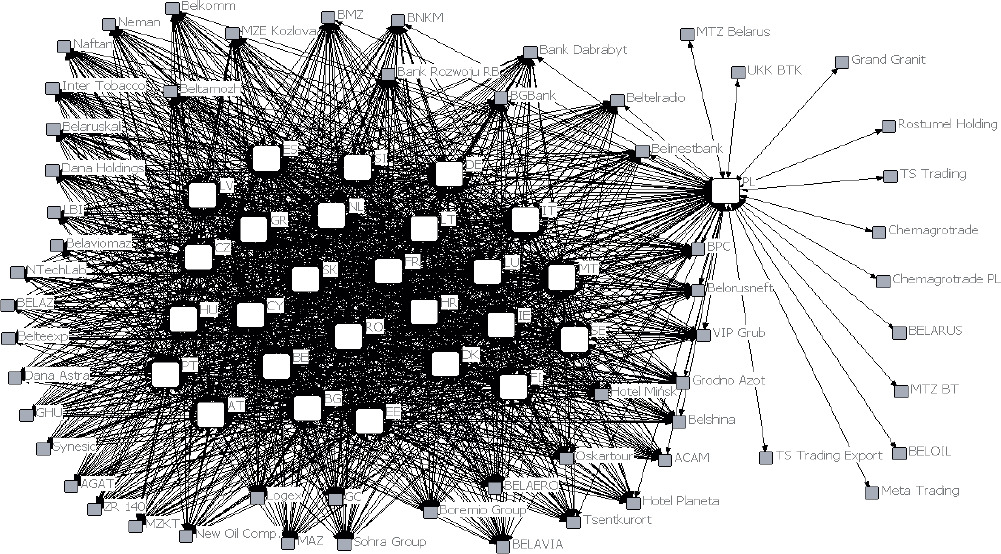
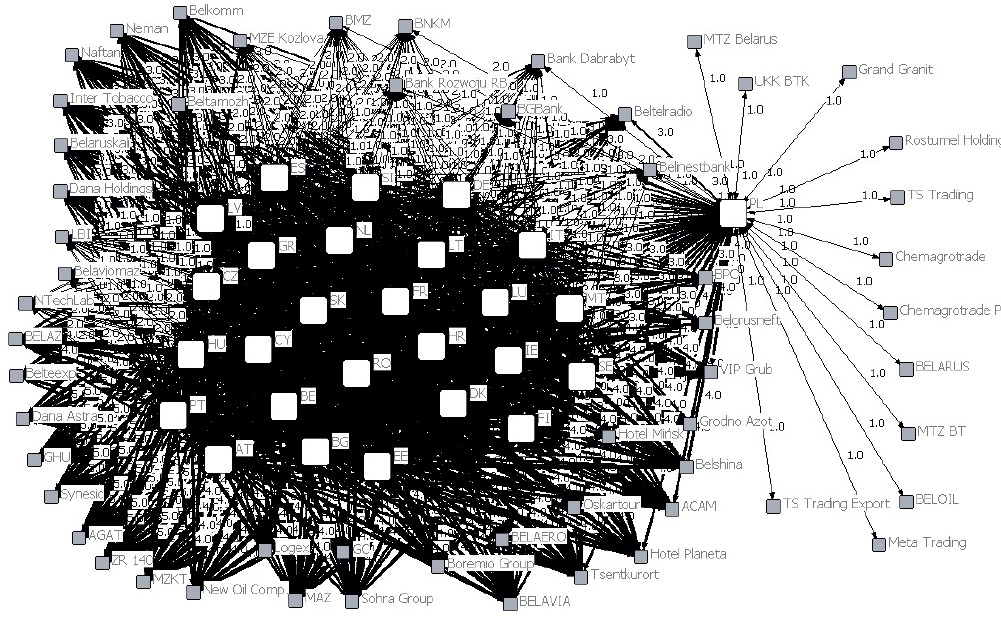
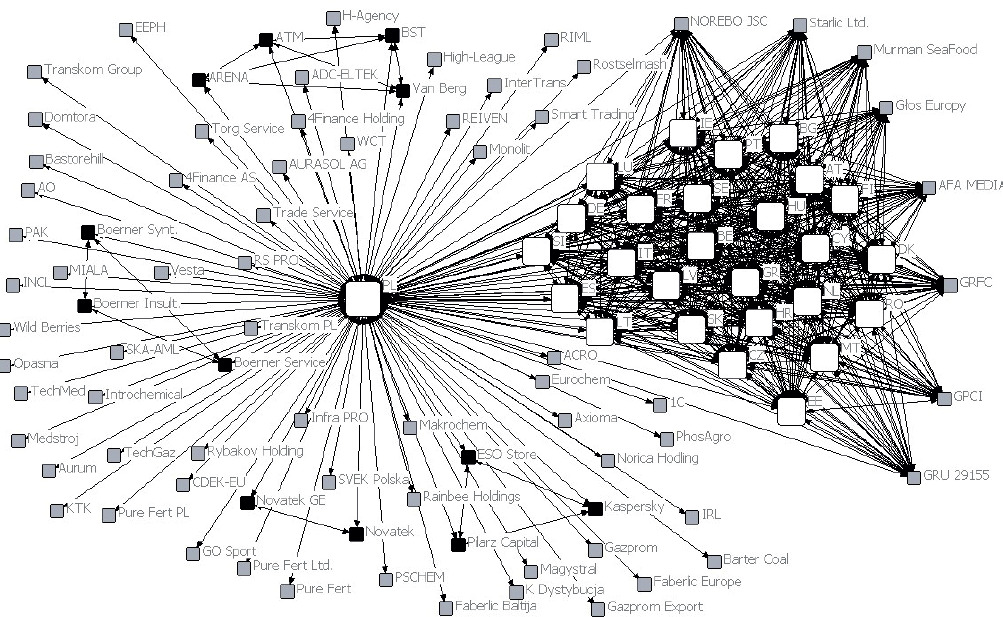
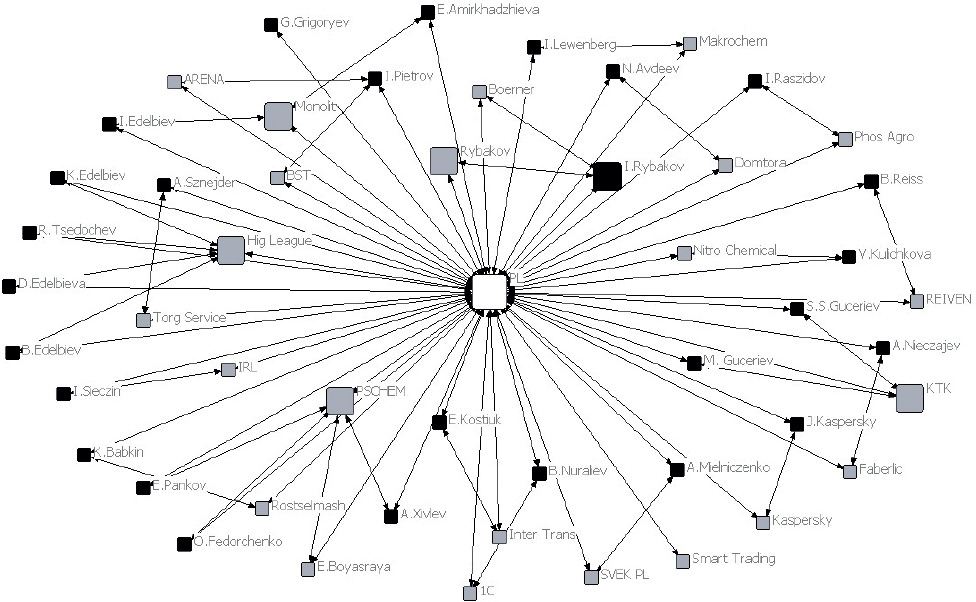
Analizowane struktury przyjmują różnorodne konfiguracje liczące od 51 do 107 węzłów i połączeń między węzłami. Na potrzeby niniejszego artykułu węzły oznaczono następującymi kolorami: biały – państwa nakładające sankcje, szary – podmioty gospodarcze objęte sankcjami, czarny – osoby objęte sankcjami a przy tym powiązane ze wspomnianymi podmiotami gospodarczymi. W przypadku sieci zaprezentowanych na Rycinach 1-2 mamy do czynienia z sieciami 83. elementowymi o dużej gęstości i bliskości wraz z strukturą gwiazdy i aktorem o dużym stopniu węzła (p=82,0) oznaczonym jako PL (państwo polskie). Należy zauważyć, że w strukturach tych wyraźnie zarysowane jest połączenie (relacja) typu most, pomiędzy węzłem państwa polskiego a węzłami pozostałych państw Unii Europejskiej. Jego rozerwanie jest równoznaczne z rozpadem sieci na mniejsze komponenty, co skutkuje ograniczonym dostępem do niektórych węzłów. W przypadku Ryciny 3 można mówić o strukturze gwiazdy (PL) ze stopniem węzła (p=106,0) o dużej liczbie połączeń a także zwartej, gęstej podsieci skupiającej pozostałe państwa Unii Europejskiej (stopień węzła p=34,0) oraz podmioty z kapitałem rosyjskim i białoruskim. Analogicznie jak w sieciach na Rycinach 1-2 pomiędzy węzłem PL a pozostałymi węzłami odpowiadającymi państwom Unii Europejskiej zachodzą połączenia typu „most”. Charakterystyczne jest, że w sieci numer 3 zaobserwować można tzw. „kliki”, czyli sieci złożone z 3-4 węzłów, oznaczonych kolorem czarnym i połączonych ze sobą. Analizując rozkład połączeń w sieci nr 4 warto zauważyć, że oprócz dominującego modelu gwiazdy, skupionego wokół węzła PL (p=50), skrystalizowane zostały węzły (np. Pietrov, Rybakov), będące brokerami (pośrednikami) sieci, którzy w analizowanych przypadkach wykazują wzmożoną aktywność w podmiotach objętych sankcjami.
Rycina 1
Sieć sankcji nałożonych przez Polskę i Unię Europejską na podmioty z kapitałem białoruskim
Źródło: opracowanie własne.
Rycina 2
Sieć sankcji nałożonych przez Polskę i Unię Europejską na podmioty z kapitałem białoruskim
n = okres sankcji
Źródło: opracowanie własne.
Rycina 3
Sieć sankcji nałożonych przez Polskę oraz UE na podmioty z kapitałem białoruskim i rosyjskim
Źródło: opracowanie własne.
Kluczowym elementem postępowania badawczego jest weryfikacja postawionych wcześniej hipotez badawczych. Wyniki analizy sieciowej potwierdzają założenia pierwszej hipotezy. Jak wspomniano w poprzednich partiach tekstu, każdą z opracowanych sieci (Ryciny 1-4) cechuje duży stopień węzła, oznaczony symbolem (PL), który jest jednocześnie brokerem struktury sieciowej w stosunku do pozostałych węzłów, będących państwami członkowskimi Unii Europejskiej oraz podmiotami białoruskimi i rosyjskimi. Należy zauważyć, że aktorów obrazujących państwa nale-żące do UE cechuje duży stopień węzła, co wzmacnia powiązania a tym samym siłę i skuteczność sankcji. Istotne jest, że w analizowanych strukturach, a konkretniej zaprezentowanych na Rycinach 1-2 węzeł PL pełni rolę brokera, który może kontrolować wszelkie procesy zachodzące w sieci, z kolei wysoki stopień węzła PL, o którym wspomniano wcześniej, rzutuje na wzrost znaczenia całej konfiguracji sieciowej.
Rycina 4
Sieć sankcji nałożonych przez Polskę na podmioty z kapitałem rosyjskim i osoby powiązane z tymi podmiotami
Źródło: opracowanie własne.
W prezentowanych strukturach sieciowych (Ryciny 1-3), adekwatnie do założeń hipotezy drugiej widoczny jest układ relacji typu „most”, zwiększający stabilność nałożonego reżimu sankcyjnego a jednocześnie scalający mikrosieci w jedną całość, co wzmacnia skuteczność polityki sankcyjnej. Założenie postawione w treści hipotezy trzeciej również okazuje się właściwe, a dowodem na to jest rozkład powiązań w sieci przedstawionej na Rycinie 2, których siła mierzona jest długością trwania sankcji. Rozszerzenie i kontynuacja sankcji jest uwarunkowana przede wszystkim siłą oraz czasem trwania agresji Rosji na Ukrainę, w tym potęgującymi działaniami zbrojnymi adresowanymi zarówno w stronę wojsk, jak również ludności cywilnej. Co prawda problematyka ta, w ścisłym tego słowa znaczeniu, nie jest przedmiotem prezentowanej analizy, ale pobieżne odniesienie do tego procesu jest kluczowe z punktu widzenia przeprowadzonej syntezy sieciowej. Poruszając się w obrębie hipotezy trzeciej warto podkreślić, że struktury przedstawione za pomocą Ryciny 1-2 stanowią kompilację dwóch podsieci, z których jedna przyjmuje postać gwiazdy z aktorem (PL) o dużym stopniu węzła, wynoszącym (p=56), druga z kolei jest wielowęzłową podsiecią Unii Europejskiej o zwartej strukturze z dużą ilością połączeń wchodzących i wychodzących, pozbawioną mostów, luk strukturalnych oraz klik. Przeprowadzona analiza nie w pełni potwierdziła założenia hipotezy czwartej, bowiem właściwość sieci jaką jest równoważność strukturalna zaobserwować można w strukturach gwiazdy, gdzie dany węzeł powiązany jest tylko z jednym i tym samym aktorem, co czyni go strukturalnie równoważnym w stosunku do innych aktorów.
Podsumowanie i wnioski
W zaprezentowanym artykule autor poddał analizie sieciowe struktury powiązań pomiędzy podmiotami białoruskimi i rosyjskimi (firmy oraz osoby) objętymi sankcjami ekonomicznymi a państwami Unii Europejskiej, nakładającymi sankcje. Należy zauważyć, że system sankcji, jego specyfika i charakter determinowany jest po pierwsze, sytuacją geopolityczną, w tym izolacją Republiki Białoruskiej i Federacji Rosyjskiej oraz chłodnymi relacjami na linii Bruksela – Warszawa – Mińsk – Moskwa, a po drugie – eskalacją konfliktu hybrydowego na granicy polsko-białoruskiej oraz pełnoskalową wojną na Ukrainie. „Oprócz instrumentalizacji migracji towarzyszą temu kampanie dezinformacyjne, operacje psychologiczne, a także fizyczne ataki na infrastrukturę i personel ochraniający granicę (…)” (Bryjka, 2024, s. 1). W zaistniałej sytuacji geopolitycznej, jak również ścierającej się narracji (propaganda Mińska i Kremla versus przekaz informacyjny Zachodu) interpretującej te same wydarzenia w zupełnie odmienny sposób, w doborze mechanizmów sankcji gospodarczych warto odnieść się do wspomnianej wcześniej klasyfikacji na represje, zastraszania i sygnały. Nie sposób pominąć faktu, że mechanizmy te w określonym stopniu znalazły zastosowanie w analizowanym przypadku sankcji gospodarczych. Patrząc przez pryzmat represji, warto podkreślić, że próba ekonomicznego osłabienia i izolacji Republiki Białorusi i Federacji Rosyjskiej spowodowały m.in. spadek poziomu życia obywateli oraz brak społecznej akceptacji dla realizowanej polityki konfliktu, z drugiej strony zmusiły wymienione państwa do zmiany kierunku współ-pracy gospodarczej w stronę państw Ameryki Południowej, Afryki czy Azji (np. kraje członkowskie grupy BRICS). Uwzględniając element zastraszania, a ściślej wywierania presji na ekipy rządzące, nie sposób nie odnieść się do ostatnich „gestów” Aleksandra Łukaszenki, skutkujących uwolnieniem więźniów politycznych, w tym Andrzeja Poczobuta. Sytuacja ta może być próbą powrotu do dwuwektorowej polityki Mińska – z jednej strony utrzymanie dobrych stosunków z Moskwą, z drugiej próba odmrażania stosunków z USA i Zachodem. Odnosząc się do mechanizmu transmisji warto przypomnieć fakt, że ujawnienie w przestrzeni publicznej informacji o planowanych sank-cjach jedynie przyspieszyło izolację Rosji i Białorusi na arenie międzynarodowej.
Przeprowadzona analiza sieci powiązań w ramach reżimu sankcyjnego potwierdziła w przeważającej mierze przyjęte hipotezy badawcze. Na kanwie analizy zgromadzonego materiału empirycznego potwierdzone zostało założenie pierwszej hipotezy w świetle której każdą z zaprezentowanych sieci (Ryciny 1-4) cechuje duży stopień węzła, oznaczony symbolem (PL), który jest jednocześnie brokerem w konfiguracji do pozostałych węzłów, czyli państw członkowskich Unii Europejskiej oraz podmiotów białoruskich i rosyjskich. Analogicznie duży stopień węzła cechuje aktorów państw należących do UE, co wzmacnia powiązania a tym samym siłę (skuteczność) sankcji. Należy zaznaczyć, że w analizowanych strukturach, a konkretniej na przedstawionych na Rycinach 1-2 węzeł PL pełni rolę brokera, zdolnego do kontrolowania wszelkich procesów zachodzących w sieci, a jego wysoki stopień determinuje kluczową pozycję (tego węzła) w konfiguracji sieciowej. W prezentowanych strukturach (Ryciny 1-3), adekwatnie do założeń hipotezy drugiej, widoczny jest rozkład relacji typu „most”, zwiększający stabilizację reżimu sankcyjnego, a z drugiej strony scalający mikrosieci w jedną całość, co wzmacnia skuteczność polityki sankcyjnej. W odniesieniu do hipotezy drugiej warto podkreślić, że przyjęte w niej założenie jest właściwe, a dowodem na to jest konfiguracja powiązań w sieci przedstawionej na Rycinie 2, których siła, a zarazem skuteczność, mierzona jest długością trwania sankcji. Istotne jest, że zarówno rozszerzenie jak również kontinuum sankcji jest uwarunkowane postępującą agresją Federacji Rosyjskiej na Ukrainę, w tym potęgowanymi działaniami zbrojnymi adresowanymi zarówno w stronę sił militarnych, jak również ludności cywilnej. Odnosząc się do hipotezy trzeciej warto podkreślić, że struktury przedstawione na Rycinach 1-2 stanowią kompilację dwóch podsieci, z których jedna przyjmuje postać gwiazdy z aktorem (PL) o dużym stopniu węzła, (p=56), druga z kolei jest wielowęzłową podsiecią Unii Europejskiej o zwartej strukturze z dużą ilością połączeń wchodzących i wychodzących, pozbawioną mostów, luk strukturalnych oraz klik. Przeprowadzona przez autora analiza niezupełnie potwierdziła założenia hipotezy czwartej, bowiem właściwość sieci, jaką jest równoważność strukturalna zaobserwować można jedynie w strukturach typu gwiazda, w których węzeł powiązany jest tylko z jednym i tym samym aktorem, co czyni go strukturalnie równoważnym w stosunku do pozostałych aktorów. Reasumując, należy zauważyć, że problematyka reżimu sankcyjnego w sieciach relacji stanowi interesujący przedmiot badań, który może być inspiracją do dalszych pogłębionych i interdyscyplinarnych badań. Wielowymiarowe podejście sieciowe jest podstawą do postawienia tezy o potrzebie pogłębionego dyskursu naukowego, zdolnego do uchwycenia społecznego, politycznego i ekonomicznego wymiaru sankcji, osadzonych na gruncie trójwymiarowej sieci, będącej metaforą, narzędziem analitycznym i realnym bytem.